
Summary
Plug & Play battery technology is already commercially available in Europe, but the UK's new Plug & Play solar framework currently covers solar systems without battery storage.
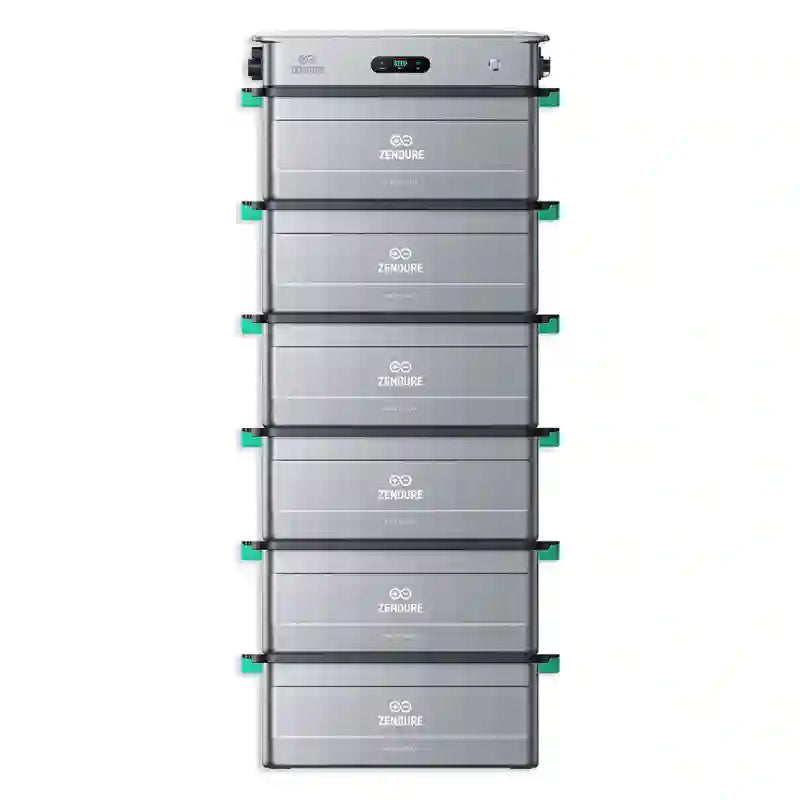
Products from companies such as Hoymiles, Zendure, Anker and EcoFlow demonstrate how compact solar storage can work. Solar panels generate electricity during the day, the system supplies household demand and surplus energy can be stored in a battery for later use.
This technology is particularly attractive for small 800W solar installations because battery storage could increase self-consumption. Instead of producing surplus electricity during a sunny afternoon and then purchasing electricity from the grid later that evening, some of the daytime surplus could potentially be stored.
For UK homeowners, however, it is important to distinguish between the technology being available and the regulatory route being available. Plug & Play solar without batteries has moved forward in Great Britain, while Plug & Play battery storage remains outside the current scheme.
🌱 Full Length Article (Click to collapse)
Can I Add a Battery to a Plug & Play Solar System?
1. Plug & Play Solar Batteries Already Exist
The idea of combining a compact Plug & Play solar system with battery storage is not experimental. Products designed around this concept are already available in European markets.
Manufacturers have developed systems specifically for balcony solar, garden solar and other small-scale installations. Some combine battery storage directly with solar-management electronics, while others use AC-coupled storage or dedicated energy hubs.
The basic idea is simple: solar electricity that is not required immediately does not have to be wasted or sent elsewhere. It can potentially be stored and used later.
2. Why Is the Situation Different in the UK?
Great Britain has recently introduced a route for compliant Plug & Play solar systems connected through a standard UK plug and socket.
This is an important change for small-scale solar because it creates a specific framework for products designed to generate limited amounts of electricity through a simple household connection.
However, the current Plug & Play framework has been developed specifically for solar generation without battery storage.
Plug-in battery storage introduces additional questions around charging, bidirectional power flow, control systems, protection and how stored electricity is subsequently supplied back into the household electrical installation.
3. Why Would You Want a Battery?
Solar generation and household electricity demand rarely match perfectly.
Consider an 800W Plug & Play system producing 650W on a bright afternoon. If the house is consuming only 250W at that moment, there is approximately 400W more solar generation than the immediate household demand.
Several hours later, solar production may be close to zero while the household is using lighting, televisions, computers, cooking appliances and other equipment.
Battery storage creates the possibility of moving some of that afternoon surplus into the evening.
4. Battery Storage Is About Self-Consumption
One of the most important terms in home solar is self-consumption.
This describes how much of the electricity generated by your solar panels is actually used within your home.
If your system produces 800 kWh during a year and your household immediately consumes 600 kWh of that generation, your direct self-consumption is relatively high.
If you are away during most sunny periods and use only 300 kWh directly, considerably more generation occurs when there is little household demand.
Battery storage can potentially increase the proportion of solar generation that eventually supplies the home.
5. How European Plug & Play Storage Systems Work
There is no single design used by every manufacturer.
Some systems place a battery-management hub between the solar panels and microinverter. Solar electricity can be directed either towards the microinverter for immediate household use or towards the battery for storage.
Other products use AC-coupled storage. In that arrangement, the solar microinverter first produces AC electricity and a separate battery system manages charging and later discharge.
6. Why Can't You Simply Add Any Battery?
A battery is not simply another solar panel.
Solar panels produce variable DC electricity according to sunlight, temperature and electrical loading. Microinverters use Maximum Power Point Tracking to control compatible solar panels within defined voltage and current ranges.
Batteries behave differently. They have their own voltage range, battery-management system, charging limits, discharge limits and safety requirements.
The PV inputs of a microinverter should therefore not be treated as general battery connectors.
7. What Happens During a Typical Day?
8. Does a Battery Generate More Solar Electricity?
No.
A battery does not increase the amount of sunlight reaching the panels and does not make the solar modules produce more energy.
What it changes is when some of the generated energy can be used.
Without storage, the greatest value normally comes from consuming solar generation immediately. A battery can potentially retain some surplus for a later period.
9. Would an 800W System Need a Large Battery?
Probably not in many households.
Battery size needs to make sense relative to the energy available from the solar system.
An 800W microinverter may produce several kilowatt-hours on a strong summer day but substantially less during winter. The amount available for battery charging is smaller still because the household may already consume part of the solar generation directly.
Installing an enormous battery beside a small solar system may therefore provide little benefit if the solar panels rarely generate enough surplus electricity to charge it.
10. Could a Small Battery Be More Appropriate?
Potentially.
Small solar installations naturally generate smaller quantities of surplus electricity, so a modest battery may be better matched to the system than a large household storage battery.
This is one reason the European balcony-storage market has developed compact modular batteries that can often be expanded if required.
A household could potentially begin with relatively modest storage and increase capacity if its solar generation and consumption pattern justify it.
11. What About Charging the Battery from the Grid?
Some modern storage systems can charge from both solar generation and grid electricity.
This creates additional possibilities when a household uses a time-of-use electricity tariff.
For example, a compatible system might charge during a low-cost overnight tariff and provide some electricity during a more expensive period.
Whether this makes financial sense depends on tariff differences, battery efficiency and how the system is configured.
12. Does a Battery Provide Power During a Blackout?
Not necessarily.
Battery storage and backup power are two different functions.
Normal grid-connected microinverters use anti-islanding protection and stop supplying the grid-connected circuit when the grid supply disappears.
A battery system that can operate during a power cut requires suitable backup functionality and an electrical architecture designed to safely isolate and supply appropriate loads.
13. What About Portable Power Stations?
Portable power stations from a growing number of manufacturers can store electricity and supply appliances through their own outlets.
Some can also charge directly from compatible solar panels.
However, a portable power station is not automatically the same thing as a Plug & Play grid-connected home battery.
The way electricity enters the battery, the way it leaves the battery and whether it can interact with the household electrical installation all matter.
14. Why Smart Energy Monitoring Matters
A battery becomes considerably more useful when it knows what the household is doing.
Smart meters, current transformers or dedicated energy meters can allow a compatible energy-management system to determine whether the property is importing electricity or producing surplus solar generation.
The system can then automatically change battery behaviour.
Instead of charging whenever solar panels produce electricity, it can prioritise household demand and charge only when genuine surplus is available.
15. Battery Losses Need to Be Considered
Batteries are not 100% efficient.
Some electricity is lost during charging, internal storage and discharge. AC-coupled systems also involve electrical conversions between AC and DC.
Therefore, using solar electricity directly while it is being generated will generally avoid the additional losses associated with storing it first.
Battery storage is useful when the alternative is not direct consumption but purchasing electricity later from the grid.
16. Could Changing When You Use Electricity Be Easier?
Before purchasing storage, homeowners can often increase solar self-consumption simply by changing when some appliances operate.
Washing machines, dishwashers, dehumidifiers, garden equipment and other flexible loads may sometimes be used during daylight hours rather than late in the evening.
Smart plugs and timer functions can make this easier where appropriate and where appliance safety instructions permit unattended operation.
This strategy effectively uses household appliances as flexible loads instead of storing the electricity in a battery first.
17. When Could a Battery Be Most Useful?
| Household Pattern | Potential Storage Benefit | Reason |
|---|---|---|
| Home occupied throughout the day | Potentially lower | Much of the solar generation may already be consumed directly. |
| Property empty during the day | Potentially higher | More daytime solar surplus may be available for storage. |
| High evening electricity demand | Potentially higher | Stored daytime energy could potentially offset later grid imports. |
| Very shaded solar installation | Potentially lower | There may be relatively little surplus generation available to charge the battery. |
| Time-of-use electricity tariff | Potential additional benefit | A compatible system may potentially combine solar storage with off-peak grid charging. |
18. Why the UK Battery Market Could Become Interesting
Plug & Play solar storage has the potential to make small-scale home solar considerably more flexible.
The same characteristics that make Plug & Play solar attractive—compact equipment, modular design and comparatively simple installation—also lend themselves to smaller storage systems.
European manufacturers are already demonstrating what this product category can look like.
For UK consumers, the remaining issue is not whether the technology can exist. It clearly can. The important question is how Plug & Play battery storage will eventually fit into UK product standards, grid requirements and electrical-safety rules.
19. Should You Buy a European Plug & Play Battery for UK Use?
Do not assume that a product designed and marketed for another European country's Plug & Play rules can automatically be used in the UK in the same way.
Electrical plugs, product standards, grid requirements and installation rules can differ from country to country.
The current UK Plug & Play solar framework should therefore not be treated as automatic approval for a battery-equipped European balcony solar system.
The correct approach is to wait for equipment and configurations that clearly meet the applicable UK requirements for their intended use.
20. What Should You Look For in Future UK Plug & Play Battery Systems?
Important specifications are likely to include:
- Battery usable capacity in kWh
- Maximum solar input
- Battery charging power
- Maximum discharge power
- Compatible solar-panel voltage range
- Maximum PV input current
- Battery chemistry
- Battery cycle life
- Round-trip efficiency
- Weather protection and IP rating
- Operating temperature range
- Smart-meter or energy-monitor integration
- Zero-export or dynamic-output control where applicable
- Backup capability, if offered
- UK grid and product compliance
- Compatibility with the complete Plug & Play system
A Practical Future Example
Imagine a UK household with two 500W solar panels connected to an 800W Plug & Play microinverter.
During a sunny summer afternoon, the system is generating 700W while the property needs only 250W.
A future UK-compliant Plug & Play battery system could potentially recognise that approximately 450W of surplus generation is available and use some of it to charge a battery.
By 7pm, solar production has fallen significantly but the household is consuming 500W. The battery could then release some of the electricity stored earlier in the day.
The result is not more solar generation. It is better timing of solar consumption.
That is the fundamental attraction of adding storage to Plug & Play solar.
Conclusion
The technology needed to combine batteries with Plug & Play solar already exists and is commercially available in parts of continental Europe.
Manufacturers such as Hoymiles, Zendure, Anker, EcoFlow and others have demonstrated that compact solar systems can generate electricity, intelligently control household output and store surplus energy for later use.
In the UK, however, the regulatory position is currently different. Great Britain now has a route for compliant Plug & Play solar systems without batteries, but battery-equipped Plug & Play systems are not yet included within that framework.
This distinction matters. The technology being technically possible does not automatically mean that a product intended for another European market can be connected to a UK household socket under the same rules.
If and when a suitable UK framework is established, battery storage could become a very natural extension of small Plug & Play solar systems.
A battery could allow homeowners to capture surplus daytime generation and use it later, increasing self-consumption and potentially reducing evening grid imports.
Until then, UK homeowners using Plug & Play solar can focus on maximising direct self-consumption—for example, by positioning panels effectively and moving flexible electricity use into daylight hours.
Plug & Play battery storage is therefore less a question of whether the technology works and more a question of when the UK's regulatory framework will allow this next stage of small-scale home solar to develop.
Follow the Development of Plug & Play Solar with Worldwide Solar
Worldwide Solar supplies products for compact UK home solar installations, including Plug & Play microinverters, compatible solar panels and practical mounting systems for gardens, walls, fences and other suitable locations.
We are also following the development of Plug & Play battery technology and the UK regulatory framework closely as this rapidly developing market evolves.
Visit Worldwide Solar to explore practical Plug & Play solar solutions for UK homes.